

Thoughts and musings

A Simple Practice for Hearing God
The voice on the phone spoke with angry frustration and it caught me completely off guard. A friend was upset about a situation I didn't fully understand, but it sounded like he assumed I knew more than I did, and I found myself absorbing the brunt of it without knowing quite how to respond in the moment. The call ended abruptly, and it left me unsettled for the rest of the day, replaying the conversation and second-guessing the words I'd said.

The Many Ways God May Speak to You
This post at a glance: We often assume hearing God's voice means hearing an actual, audible sound. In reality, Scripture and everyday experience show that God's communication moves through several distinct channels and recognizing them widens our ability to notice when God is already communicating, often in ways we've been overlooking for years.

From a Few to All: What Changed at Pentecost
Here's a tension worth sitting with: Scripture tells us "Jesus Christ is the same yesterday and today and forever" (Hebrews 13:8), and that "I, the Lord, do not change" (Malachi 3:6). And yet Scripture also tells us the covenant itself changed. "The days are coming," declares the Lord, "when I will make a new covenant" (Jeremiah 31:31), and God promises to give His people "a new heart" and to put His Spirit "within you" (Ezekiel 36:26, 27).

“This Is That": How Peter Explained Pentecost
Imagine the scene: a loud, sudden wind fills a room in Jerusalem during one of the busiest festival weeks of the year. Tongues of fire appear over the heads of a group of believers. They begin speaking in languages they've never learned, clearly and intelligibly. A crowd gathers from every direction, confused and amazed, murmuring theories about what's happening and whether these people have simply had too much wine. In the middle of the chaos, one fisherman-turned-apostle stands up and says, "Let me explain this to you and listen carefully to what I say" (Acts 2:14).

The God Who Pursues You
Many of us carry an unexamined picture of God as distant. We imagine God as a little angry, a little remote, and someone who is theoretically present but practically unreachable. We picture ourselves the way Adam and Eve were after the fall: outside the garden, not in it. And once we get that image stuck in our heads, we assume our own desire to hear from God is somehow out of line, a request for more access than we deserve. If that's the picture you carry, I want to suggest that we rethink it.

You Were Made to Hear God's Voice
Have you ever wondered if God actually wants to communicate with someone like you? Does He want to tell you something… anything? This is you, not high-profile leaders or people who are spiritual and seem permanently tuned to some higher frequency, but to you, in the middle of your ordinary life on an ordinary Tuesday. Many of us carry that question or something similar inside of us. We don't say it out loud because it feels a little embarrassing, like admitting something about yourself that you aren’t quite comfortable having others know.

Why Christ's Character Is the Missing Key to Effective Prayer Ministry
Have you ever prayed for others, done all the right things, followed the prayer model, and yet, see little response? You work to get your words right, to bring everything together, but you still see little or no results. You keep falling back on the prayer model over and over again. You start to lose your joy and praying for others starts to feel more like a program than a relationship.

When Woundedness Block Your Prayers: How God Can Set You Free
Have you ever wondered, how can I pray for others when I don't really experience God in my life? Or, I would like to pray for others more, but my wounds and doubts haven't been dealt with well in my own life.

Three Habits That Improve How We Hear from God
Recently, I traveled overseas and taught a two-day intensive class at a seminary. During one session, I was asked: How can we improve our ability to hear from God? How can we improve our receptivity to hearing from God? Can we change things in our environment, our practices, or our habits to make a positive difference?

Hearing from God: Can You Learn to Listen?
Most of us fall into a few broad categories when we think about “hearing” from God. Some of us don't think about it much because we haven't experienced it, so we don't ponder or consider it too much. Others hear stories of people who regularly hear from God or experience moments of clarity where they understand what God is saying. Those stories stir something in us, and we would like that same clarity. Then there's another group, people who do hear from God, but erratically, with no seeming pattern or way to understand why sometimes we have clarity and other times there is silence.
Why We Need a Prayer Ministry Model
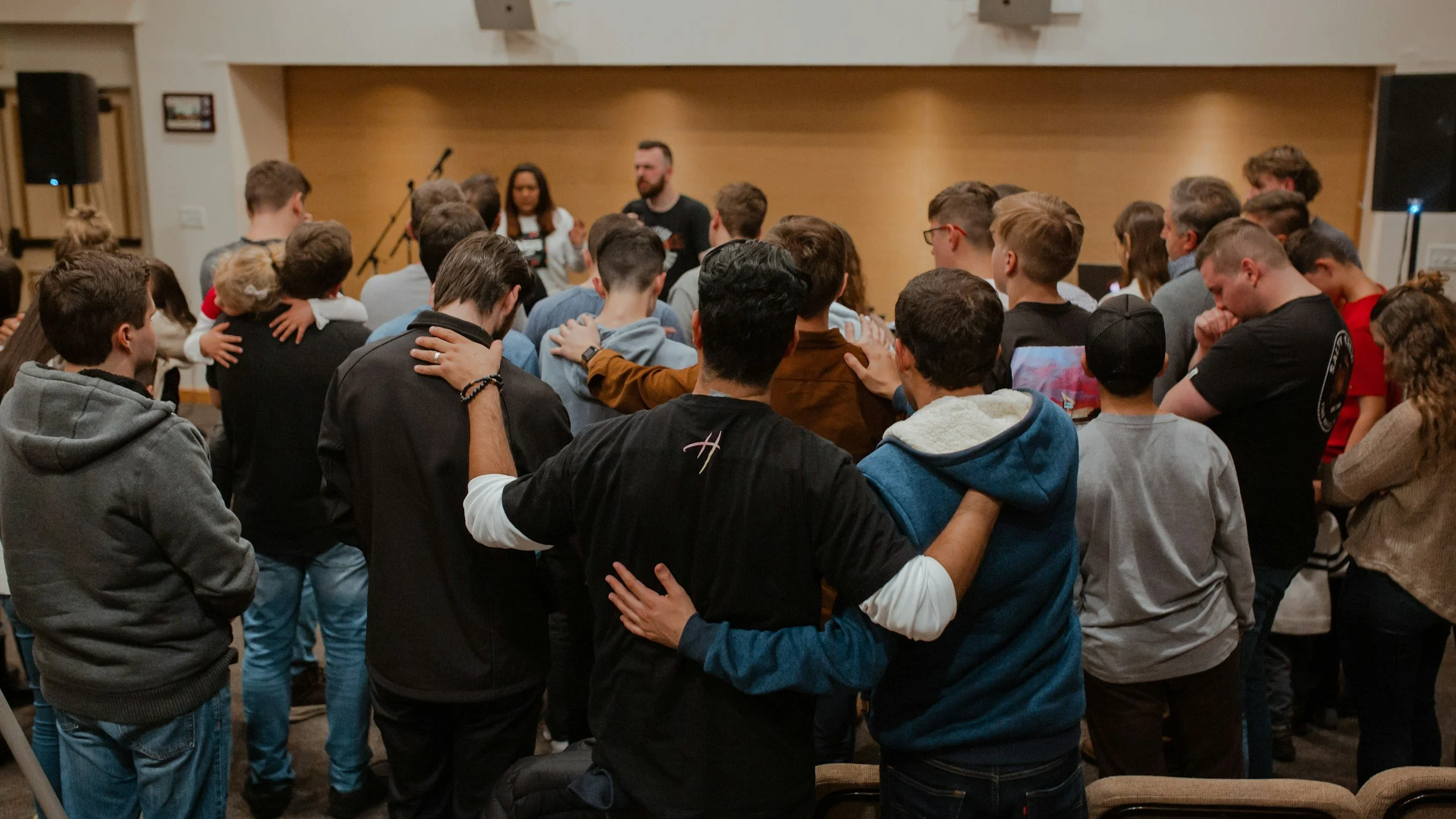
Have you ever wondered if there is a way to pray for others that will go deeper? Most of us want to pray for people in ways that are meaningful and impactful.
We may be ready to move beyond a quick, polite "Lord bless them" at the end of a conversation, though there's nothing wrong with that type of prayer. We want to pray in ways that meet people where they are, addresses what they're struggling with, and leaves them sensing that they experienced God in that moment. We want to show up for our friends, coworkers, and neighbors who are hurting and offer them something genuine.

The One Thing That Can Change Our Prayer Ministry
He was hard to miss, though not in any way that draws a crowd. He kept his head down as he moved through the room, his posture folded inward, as though he had spent years trying to be as inconspicuous as possible — and had finally succeeded. He had been praying about his situation for a long time. Others had prayed over him too, with sincerity and conviction, invoking spiritual authority, speaking healing and freedom over him, doing everything that was supposed to work. And nothing had changed.

A Negative Idea That Can Keep Believers Out of Prayer Ministry
There is a belief operating in some churches that is rarely spoken out loud. It is a belief that can grow over the years because of unchallenged assumptions, and normally it isn't something that is deliberately cultivated. The thought sounds like this: Prayer ministry is for those with special spiritual gifts, an unattainable spirituality, or unique spiritual authority. Here is the problem for many of us: that thought can seep into our minds, sometimes partially or even unconsciously, and it can damage the health of your church's prayer culture in ways we don't think about or realize.

How to Pray for Others in Ways That Actually Connect
Have you ever experienced something like the following story in your prayer ministry? An acquaintance had received prayer several times from people who cared about her and meant every word. The prayers were theologically sound and the people praying were sincere, but each time she left with a sense that the prayer hadn't connected with her or connected her to Jesus. It felt more like someone had described her situation to God while she observed the process. She couldn't fully explain the gap. She was grateful and felt a bit guilty for not being more grateful.

How to Grow in Prayer Ministry Through Every Season
Every person who has been seriously engaged in prayer ministry for any length of time has inhabited two different versions of their experience. There is a version that blazes because we see breakthroughs and answers that seem to happen regularly. In those seasons, the presence of the Holy Spirit is near, our confidence runs high, and the evidence of God's work is consistent enough to sustain our momentum of practice.

When You Feel Unseen: How Prayer Ministry Meets You Where You Are
Millions of people today feel invisible. They feel unseen in their struggles, unheard in their pain, and disconnected from any sense of belonging. One reason prayer ministry exists is to change that by being rooted in the Greatest Commandment (Matthew 22:36–40). When practiced with love and the power of the Holy Spirit, demonstrated through attentive listening and a holistic perspective, prayer ministry not only addresses immediate requests, it creates space for deep and lasting transformation.

When You Ask for Prayer, Something Holy Has Already Happened
Often people who hesitate to ask for prayer are not struggling with unbelief; they struggle with the concern that their faith isn’t enough. But Scripture helps us see that asking for prayer is an expression of faith. Jesus never used “lack of faith” to condemn or shame those who came to Him. This post explores some of what the Bible teaches about faith in healing prayer, why shame has no place in prayer ministry, and how prayer teams can create a grace-filled environment where the Holy Spirit moves freely.

How Prayer Ministry Can Help You Break Free
People carry burdens such as relational pain, spiritual frustration, and circumstances that feel impossible to change. Prayer ministry offers more than comfort; it opens a doorway to real transformation through the power of the Holy Spirit. This post explores what it means to feel spiritually stuck, why prayer is a proven pathway forward, and how a simple, biblical approach to praying for others can help people begin their healing journey.

Prayer Ministry that Impacts
Most people who come forward for prayer carry a concern. Sometimes it is a burden that’s difficult to articulate or a longing that lacks words. They desire to sense the Holy Spirit's presence; they know it's real, but they've rarely experienced it. Many of our ministry times, though well-intentioned, move too quickly, fill every silence, and leave little room for God to do what only God can do. There is a better way that makes space for the Holy Spirit through the way we posture ourselves in prayer.

You Can't Pray Well for Someone You've Judged
Many people who pray for others hit the same invisible wall: a heart that quietly slips from compassion to evaluation. This post explores what the Bible reveals about the posture that makes prayer ministry genuinely effective, and why the Holy Spirit works through what we're willing to surrender.